Showing posts with label Conflict. Show all posts

Tuesday, 11 June 2013

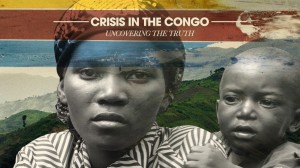
Crisis in the Congo: Uncovering The Truth

Congo Justice

Millions of Congolese have lost their lives in a conflict that the United Nations describes as the deadliest in the world since World War Two. United States allies, Rwanda and Uganda, invaded in 1996 the Congo (then Zaire) and again in 1998, which triggered the enormous loss of lives, systemic sexual violence and rape, and widespread looting of Congo’s spectacular natural wealth.

The ongoing conflict, instability, weak institutions, dependency and impoverishment in the Congo are a product of a 125 year tragic experience of enslavement, forced labor, colonial rule, assassinations, dictatorship, wars, external intervention and corrupt rule. Analysts in the film examine whether U.S. corporate and government policies that support strongmen and prioritize profit over the people have contributed to and exacerbated the tragic instability in the heart of Africa.

Crisis in the Congo: Uncovering The Truth explores the role that the United States and its allies, Rwanda and Uganda, have played in triggering the greatest humanitarian crisis at the dawn of the 21st century. The film is

Monday, 10 June 2013

CANADA IN THE WARS IN CENTRAL AFRICA: Genocide and Looting of the Congo's Natural Resources Through Rwandan Intervention

A new book by Patrick Mbeko released 12 May 2012.

Read the Preface in English by Keith Harmon Snow here.


PREFACE

In the late spring of 1991 I crossed Uganda on a mountain bicycle and slipped into the eastern Congo, then known as Zaire. I was not interested in politics then, knew nothing about race relations or imperialism and, certainly, nothing about genocide. Africa was an adventure to find and experience life amongst tribal cultures and wildlife I'd seen re-presented in the National Geographic Magazine. After a few safaris in Kenya and Tanzania and after summiting Mount Kilimanjaro (covered white with glaciers at the time) and inspired by the portrayals of Africa I'd seen in the western media imagination, I set out for the "heart of darkness": Zaire.

In western Uganda I passed through Lake Victoria National Park but there were few animals to be seen. Uganda had suffered a bloody cataclysm due to the previous decade of war, 1980-1990, which today (as then) is described as a "civil war" involving African tribes. The bloodshed was spawned by the victorious National Resistance Movement/Army (NRM/A) under the command of Yoweri Museveni, Uganda's "president" for the past 24 years, and it was backed by Anglo-American interests, but I neither knew nor cared about any of this. I also did not then know the name Paul Kagame, the so-called "president" of Rwanda, who has led a dictatorial regime in Rwanda since 1994, when the Museveni-Kagame axis seized power by coup d'etat. Kagame served as Yoweri Museveni's Director of Military Intelligence and, along with his commander and many others, is responsible for war crimes, crimes against humanity and genocide in Uganda as the NRM/A fought its bloody way to power (1980-1985) and then ruthlessly consolidated that power (1985-1990).

In 1990, Major General Paul Kagame had been receiving military training in the United States under the Pentagon's elite psyops (psychological operations) and counter-insurgency programs at Fort Leavenworth Command and General Staff College in Kansas, USA. In September Kagame was flown back to Uganda to assume command of the guerrilla army that invaded Rwanda on October 1, 1990. Given what Maj. Gen. Paul Kagame has done in Uganda (circa 1983-1988), Rwanda (1990-1994) and Congo (1995-2010), the only meaningful interpretation of the terminology "psyops" and "counter-insurgency" would be to define this as training in scorched earth terrorism, torture, assassinations and mass murder. Advancing their military campaigns from Uganda to Rwanda to Congo, Kagame and Museveni have never diverged from their path: the modus operandi has always been absoluter terrorism and mass murder to depopulate the land, eliminate the claimants to that land, and control or plunder its resources.

Saturday, 8 June 2013

"Life is Suffering": Among the Displaced in Eastern DRC

MSF

DRC 2013 © Amandine Colin/MSF
Victorine (second from left, in black T-shirt, 
sits against a tent near Sotraki Stadium.
Victorine and her family fled their home near Goma, in the eastern Democratic Republic of Congo (DRC), during four days of violent clashes in late May between the Congolese army and the M23 rebel group. She is now one of up to 5,000 people taking refuge in Sotraki Stadium, on the outskirts of the city.

Slim and dressed in a dusty black T-shirt and skirt, she leans back against a fence while keeping an eye on her four children, aged from two to ten. She'd been sitting in this same spot for the past 24 hours. Like just about everyone around her, Victorine is exhausted. Many of those arriving have been on the move for several days; others have been hiding in schools and churches to escape the fighting.

Victorine left her home village of Kibati, north of Goma, with her husband and four children. “We heard bombing, we were scared,” she says. Bullets were flying and bombs were dropping on houses. A neighbor was killed by a stray bullet.

"THIS WAR MUST END" : JACQUES DEPELCHIN ON THE CONGO

by Jacques Depelchin

Photo: On Wednesday 26 September Jacques Depelchin presented a talk on the topic: ‘The Democratic Republic of the Congo: Africa’s First World War?’. The talk was organized by Thinking Africa, a project of the Department of Political and International Studies. Jacques Depelchin is a Congolese historian who is currently spending six months in the Departments of History and Political and International Studies as the 2012 Hugh le May fellow.

Visiting scholar Jacques Depelchin recently presented two talks on the topics: ‘The Democratic Republic of the Congo: Africa’s First World War?’ and ‘Reclaiming African History, Reclaiming Humanity’. The talks were organized by Thinking Africa, a project of the Department of Political and International Studies. Jacques Depelchin is a Congolese historian who is currently spending six months in the Departments of History and Political and International Studies as the 2012 Hugh le May fellow.Jacques Depelchin, a [former] leader of the Rally for Congolese Democracy, was interviewed by SAR's Congo correspondent David Moore in August [2000], just as the Democratic Republic of the Congo's latest round of peace negotiations under the rubric of the Lusaka Accord was, once again, being pronounced a failure. Readers will recall that, in August 1998, the RCD was the first rebel group to mount a challenge to Laurent Desire Kabila, at much the same point as Rwanda and Uganda also turned against their ally of 1996 and 1997. Led by University of Dar es Salaam History professor Ernest Wamba dia Wamba, the RCD articulated the most progressive and democratic policies of all the Congolese rebel groups that mushroomed up during this period. More recently, however, the RCD has been plagued by a major split: a more militarist faction led by Emile Ilunga and backed by Rwanda has forced the Wamba dia Wamba group into the Bunia region of north-east DRC and away from the more newsworthy centres such as Kisangani where the Ilunga forces are currently in a situation of stalemate vis-a-vis Kabila's forces.

While such a situation might seem at first to suggest a weakening of Wamba dia Wamba's group, this repositioning may also be having positive effects. Certainly, it appears to have influenced Jacques Depelchin's own thinking about peace and reconstruction, encouraging him to shift away from the state (and rebel-group) centred approach of the Lusaka Accords and towards a more "people-oriented" stance. This position is articulated clearly in the course of the following interview. The positive aspects of this shift are clear to see. At the same time, when one also takes into account the entrenched state-centredness of international relations and of peace-keeping discourse what can it mean in practice to say that "global civil society" has to work with the popular forces for peace? Needless to say, there are some tough issues for SAR readers to consider here.

For their part, Jacques Depelchin and his group continue to negotiate the conflicts that emerge over such issues as land tenure relations and the like - even as, in doing so, they brush up against the complexities of the interface of "tribe" and class and the difficulties offered up by colonially imposed boundaries and by the various state-driven armies and bureaucracies that swirl around them. Yet they have seen enough and done enough to eschew any notion of the "end of history" that the post-Cold War "world order' was supposed to have delivered. In their corner of Congo, Depelchin seems to suggest, it's more like history is restarting.

Before assuming a leadership role in the Rally for Congolese Democracy Jacques Depelchin worked as a professor of economic history at the Universities of Dar es Salaam, of California-Berkeley, and of Eduardo

Sunday, 2 June 2013

Problematic Peacekeeping in the DRC: From MONUC to MONUSCO

by M H A Menondji
ThinkAfricaPress

Why have large-scale international efforts to end the violence in the DRC failed again and again?

mha_menondji19.JPGNegotiations between the M23 rebels and the government of the Democratic Republic of Congo (DRC) continue to move at a painfully slow pace. Attempts to end one of the region's worst conflicts in recent years appear to be faltering somewhat in the Ugandan capital of Kampala, with M23 being accused of heaping "capricious extra demands" on Joseph Kabila's government. Similarly, little progress was made at the recent African Union summit in Ethiopia, with UN General-Secretary Ban Ki-moon's proposed peace pact being rejected by certain key countries .

International efforts to end the violence have failed repeatedly for reasons that range from a misdiagnosis of the conflict’s roots to the inability to come up with a suitable exit strategy. The failures of peacekeeping in the Great Lakes region ultimately seem to stem from an incongruity between short- and long-term goals. Nearly 16 years into a state of almost continual conflict, the DRC’s 1.2 million internally displaced persons (IDPs) are evidence that the root causes of the violence are yet to be addressed – it is crucial these are accounted for before any further peacekeeping operations are launched.

Wednesday, 15 May 2013

Congo's Most Powerful Rebel Speaks

Timo Mueller & Christoph Vogel
Real Clear World

Colonel Makenga, center, commander of the M23 rebel movement.It was a rainy Sunday afternoon in early April when we called "Brigadier General" Sultani Makenga, the military leader of M23, currently one of the strongest armed groups in eastern Congo. Working as field researchers in the Kivus, we wanted to engage with him face-to-face to capture his take on the DR Congo's state of affairs and learn first-hand about the latest developments inside the rebellion. M23 was consumed by heavy infighting in recent weeks, after latent fractions and fissures between Makenga and his rival Bosco Ntaganda erupted into open and violent conflict. In the ensuing whirlwind of events, Makenga regained the upper hand in late March, and Ntaganda surrendered to the International Criminal Court, leaving many of his men with no choice but to re-defect.

The initial telephone conversation was an unanticipated success. With little hesitation, Makenga agreed to meet us. The ensuing organizational logistics were simple and matter of fact, conducted via text message informing us of his whereabouts north of the provincial capital of Goma. As an individual sanctioned by the United Nations and the United States government, he remained relatively unconcerned and non-clandestine about his location. 

Monday, 13 May 2013

We're going to war

Graeme Hosken
The Times

As South African troops prepare for deployment to the violence- racked east of the Democratic Republic of Congo, the enemy is gearing up for full-scale war.

A 1000-strong South African contingent is expected to be deployed to the region within a month as part of an African intervention force. It will almost certainly be drawn into conflict with the heavily armed and battle-hardened M23 rebel group after the collapse of peace talks between the rebels and the central government in Kinshasa.

One of 33 rebel groups in the region, the M23 has 40t of munitions looted from DRC army armouries in clashes in the east of the country last year.

Friday, 3 May 2013

Congo: “Two Children May Have Died for You to Have Your Mobile Phone”

Inés Benítez
IPS

“It’s possible that two children died so that you could have that mobile phone,” says Jean-Bertin, a 34-year-old Congolese activist who wants to end the “absolute silence” around the crimes committed in his country to exploit strategic raw materials like coltan.

The Democratic Republic of the Congo (DRC) has at least 64 percent of worldwide reserves of coltan, the colloquial African name for a dull black ore composed of two minerals, columbite and tantalite.

Tantalum, the metal extracted from this ore, is a rare, hard, blue-gray, lustrous transition metal that is highly corrosion resistant. It is used in the production of capacitors for electronic equipment such as mobile phones, computers and tablets, as well as in earphones, prosthetics, implants and turbine blades, among many other products.

“The DRC’s greatest curse is its wealth. The West and all the others who manufacture weapons have their noses stuck in there,” laments Jean-Bertin, who arrived eight years ago to the southern Spanish city of Málaga from Kinshasa, where his parents and two brothers still live.

Wednesday, 1 May 2013

Patrice Lumumba, The Sacrifice of a True African Leader

Honourable Saka

honourablesaka


My PhotoPatrice Lumumba (2 July 1925 – 17 January 1961), the first legally elected Prime Minister of the Congo Republic was murdered by a CIA- sponsored plot, over 50 years ago.

We must move forward, striking out tirelessly against imperialism. From all over the world we have to learn lessons which events afford. Lumumba's murder should be a lesson for all of us”. — Che Guevara, 1964.

“Dead, living, free, or in prison on the orders of the colonialists, it is not I who counts. It is the Congo, it is our people for whom independence has been transformed into a cage where we are regarded from the outside…” — Patrice Lumumba, October 1960.


Introduction

The truth surrounding the brutal murder of Patrice Lumumba is an embarrassing event which, when exposed to the African youth of today, will definitely send the US government scratching its head. The Democratic Republic of Congo (DRC) has had a troubled history since the assassination of Patrice Lumumba. Currently there is conflict in the eastern DRC. But who are the main actors in the conflict this time? African leaders, it is important to remember history so that you can appreciate what is going on today in Africa and the rest of the world.

Rwanda and the Democratic Republic of Congo in the Propaganda System

David Peterson and Edward S. Herman

MonthlyReview

 
Excerpted from The Politics of Genocide(Monthly Review Press, 2009)

Elsewhere we have written that the breakup of Yugoslavia “may have been the most misrepresented series of major events over the past twenty years.”1 But the far bloodier and more destructive invasions, insurgencies, and civil wars that have ravaged several countries in the Great Lakes region of Central Africa over the same years may have been subjected to even greater misrepresentation.

To a remarkable degree, all major sectors of the Western establishment swallowed a propaganda line on Rwanda that turned perpetrator and victim upside-down. In the much-cited 1999 study, “Leave None to Tell the Story”: Genocide in Rwanda, on behalf of Human Rights Watch and the International Federation of Human Rights in Paris, Alison Des Forges writes that “By late March 1994, Hutu Power leaders were determined to slaughter massive numbers of Tutsi and Hutu opposed to [Hutu President Juvénal] Habyarimana,” and that on April 6, 1994, with the assassination of Habyarimana, “[a] small group of his close associates…decided to execute the planned extermination.”

Wednesday, 24 April 2013

Partition Talk

Justin Podur
http://killingtrain.com/node/912
Podur, Justin J
When Belgium realized in the 1950s that, given that France and Britain were losing their African colonies, it would no longer be able to hold on to Congo, it set about trying to guarantee continued control over the strategic aspects of the economy, especially the mines. At first, it sponsored its local political groups, but lost control of these. The next step, just after the Congo became independent, was mercenaries and proxy warfare – a huge international crisis and United Nations mission that was, in the 1960s, called “The Congo Crisis”. The political strategy accompanying the acts of Belgium's mercenaries (many of which were from apartheid South Africa) was to support the secession of Katanga province from the Congo. Once a dictator, Mobutu, came to power, the international community allowed him to crush the secessionists.

Decades later, the international community was not capable of stopping a real genocide in Rwanda. After the Rwandan genocide, when the victors in the Rwandan civil war took over that country and the losers of the civil war fled into Congo, the international community helped Rwanda invade the Congo.

The Real Invasion Of Africa Is Not News, And A Licence To Lie Is Hollywood’s Gift

John Pilger
Zcommunications

A full-scale invasion of Africa is under way. The United States is deploying troops in 35 African countries, beginning with Libya, Sudan, Algeria and Niger. Reported by Associated Press on Christmas Day, this was missing from most Anglo-American media.

The invasion has almost nothing to do with “Islamism”, and almost everything to do with the acquisition of resources, notably minerals, and an accelerating rivalry with China. Unlike China, the US and its allies are prepared to use a degree of violence demonstrated in Iraq, Afghanistan, Pakistan, Yemen and Palestine. As in the cold war, a division of labour requires that western journalism and popular culture provide the cover of a holy war against a “menacing arc” of Islamic extremism, no different from the bogus “red menace” of a worldwide communist conspiracy.

Reminiscent of the Scramble for Africa in the late 19th century, the US African Command (Africom) has built a network of supplicants among collaborative African regimes eager for American bribes and armaments.

Why did Rwandan War Lord Accused of Crimes in Congo, Give Himself Up to the ICC?


Maurice Carney: Rwanda hands over one warlord to ICC and props up others as it continues plunder of Congo's resources -  


PAUL JAY, SENIOR EDITOR, TRNN: Welcome to The Real News Network. I'm Paul Jay.

On March 18, Bosco Ntaganda, accused of being a war criminal for his activities in the Congo--he's a warlord and, as we understand it, working mostly with Rwanda. He's of Rwandan descent. Any rate, he walks into a U.S. embassy in Rwanda and gives himself up. He's then flown to the Netherlands. And he's going to face charges for war crimes before the International Criminal Court.

So just why did he give himself up? And does this reflect any change in Rwandan policy towards the Congo or U.S. policy?

Now joining us to talk about all of this is Maurice Carney. He's the executive director and cofounder of Friends of the Congo. He joins us from Washington, D.C.

Thanks for joining us again, Maurice.

MAURICE CARNEY, EXEC. DIR. AND COFOUNDER, FRIENDS OF THE CONGO: Hi. It's a pleasure being with you, Paul.

JAY: So tell us a little bit about this guy. And then why on earth would he give himself up?

CARNEY: Yeah. The claim that Bosco Ntaganda gave himself up is dubious at best. However, the best way to look at the situation is that Bosco represents the third high-level Rwandan proxy who have committed crimes in the Congo and then fled back into Rwanda.

Monday, 22 April 2013

Hotel Rwanda Revisited: an Interview with Paul Rusesabagina

by DANIEL KOVALIK


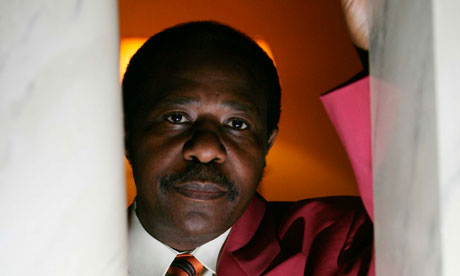
PAUL RUSESABAGINA, DORCHESTER HOTEL, LONDON, BRITAIN - 03 MAR 2005 With the takeover of the city of Goma in the Democratic Republic of the Congo (“Congo”) last year by M23 rebels, and with Rwanda receiving a seat on the UN Security Council last year as well, I wanted to talk to Rwanda’s most famous son, Paul Rusesabagina, about Rwanda’s role in supporting the M23 militia.   Paul Rusesabagina was famously portrayed in the movie Hotel Rwanda by Don Cheadle.

My first question to Paul was about the criminal charges brought against him in 2010 by the Rwandan government for his questioning the role of Paul Kagame (now Rwandan President) and his RPF forces in the Rwandan civil war and in the Congo.   The government accused him of allegedly advocating a “double genocide” theory.  

PR:  This is what happens to any person who has really been advocating about the genocide that happened in 1994.   I was on the inside and I sensitized the whole world.  I called for help. I tried to help people during that period of time.  And afterward, I still fought for the truth to come out until I noticed that that was not what the Rwandan government wanted to do.  They wanted power — not shared — and they wanted to demonize the rest of the population so that the army appeared to be the only nice people.  For that I was not considered a nice guy.  I had no choice but to go into exile.  In exile, I was the one who spoke real loudly about the Rwanda genocide—the Rwandan genocide; not two genocides.  . . .  If we Rwandans don’t reconcile, and sit down honestly and talk, then we might see history repeating itself because the Rwandan government as of now also has been involved in many massacres.  This is what I talk about.  The Tutsi government has been involved in many massacres.  And they are still doing it.  So that’s what they have been doing in the Congo.  If you look at the situation as it has been analyzed, for example, in the Mapping Report which you may be aware of.  People analyzing that are recording a genocide. (1)

Paul Kagame: “Our Kind of Guy”

Edward S. Herman and David Peterson
http://www.zcommunications.org/paul-kagame-our-kind-of-guy-by-edward-herman-1


589229Back in 1995, a senior Clinton administration official, commenting on Indonesian President Suharto, then on a state visit to Washington, referred to him as “our kind of guy.”[
1] He was speaking about a brutal and thieving dictator and double-genocidist (first in Indonesia itself, then East Timor), but one whose genocide in Indonesia terminated any left threat in that country, aligned Indonesia militarily as a Western ally and client state, and opened the door to foreign investment, even if with a heavy bribery charge. The first segment of the double-genocide (1965-1966) was therefore serviceable to U.S. interests and was so recognized by the political and media establishment. Indeed, following the mass murders in Indonesia proper, Robert McNamara referred to the transformation as a “dividend” paid by the U.S. military investment there,[2] and in the New York Times, James Reston called Suharto's rise a “gleam of light in Asia.”[3]

Rwanda's President Paul Kagame clearly is another “our kind of guy”: Like Suharto, Kagame is a double-genocidist, and one who ended any social democratic threat in Rwanda, firmly aligned Rwanda with the West as a U.S. client, and opened the door to foreign investment. Later, and far more lucratively, Kagame helped carve out resource-extraction and investment opportunities for his own associates and the U.S. and other Western investors in neighboring Zaire, the massive, resource-rich Central African country renamed the Democratic Republic of Congo (DRC) in 1997 during the First Congo War (ca. July 1996 - July 1998).

Rwanda: at last we know the truth

Linda MelvernFew events have been the subject of as many rumours and lies as the assassination on 6 April 1994 of Rwanda's President Juvénal Habyarimana. We may never know the identity of the assassins who fired the two missiles that blew his jet apart as it came in to land at Kigali International Airport; yet this one key event signalled the targeted elimination of Rwanda's political opposition, and triggered the genocide of the Tutsi people.
Since that night there has been a ceaseless propaganda war, with each side blaming the other for what happened. One version is that the rebel Tutsi RPF assassinated the Hutu president in a cynical bid to oust his regime; another version blames Hutu extremists who, faced with the possibility of power-sharing with the Tutsi minority, carried out a coup d'etat in order to create a "pure Hutu" state.
This is why the publication of an expert investigation into the aircraft crash in Paris today will have such tremendous repercussions. After 18 years it has essentially settled the central question of who was morally responsible for triggering the genocide.

Friday, 19 April 2013

US Protects Rwandan and Ugandan Interference in Congo

Maurice Carney: US policy is seeking "stability" by militarizing Africa
The Real News

PAUL JAY, SENIOR EDITOR, TRNN: Welcome to The Real News Network. I'm Paul Jay. And welcome to this week's Africa report, and this week with Maurice Carney, who now joins us from our office in D.C. Maurice is executive director and cofounder of Friends of the Congo.

Thanks for joining us again, Maurice.

MAURICE CARNEY, EXECUTIVE DIRECTOR AND COFOUNDER, FRIENDS OF THE CONGO: Pleasure being with you, Paul.

JAY: So what are you reporting on this week?

CARNEY: Well, you know, there's a great deal taking place on the continent and, of course, here in the U.S. as it portends for U.S. policy towards Congo in particular and the African continent as a whole.

Just dealing with the Congo itself and recent developments, there was some hope that was put behind a peace deal that was announced by the UN secretary-general, Ban Ki-moon, that would be signed earlier this week at the African Union Summit. However, this vaunted peace deal that would include the signing of eight African countries to try and bring some stability to the east of the Congo faltered. On the morning that the deal was to be signed, the UN announced that the signatures were not ready.

And part of the problem is that we have discord between regional forces on the African continent and how they envision bringing stability to east of the Congo.

The West’s war against African development continues

Dan Glazebrook


Tax havens, rising debt-extortion, loans to African military dictators, capital flight, unfair trade prices, militarization of Africa through AFRICOM are the many ways in which the West’s war against African development continues. The recent crisis in Mali and Algeria are being used by the West to further its domination over Africa.

Africa’s classic depiction in the mainstream media, as a giant basket case full of endless war, famine and helpless children creates an illusion of a continent utterly dependent on Western handouts. In fact, the precise opposite is true – it is the West that is reliant on African handouts. These handouts come in many and varied forms. They include illicit flows of resources, the profits of which invariably

Wednesday, 17 April 2013

The invention of the indigène


Mahmood Mamdani


 For the institutions that claim to represent ‘the international community’ – the Western press, international NGOs and UN agencies – the armed conflict in the Democratic Republic of Congo has been a paradigm of senseless violence. The number of casualties is indeed staggering. In 2001, the New-York-based International Rescue Committee started providing estimates of war-related deaths since the conflict began in 1998: they rose from 1.7 million in 2001 to 5.4 million in January 2008. If correct, these figures account for about 8 per cent of the current population of the country. They were called into question in 2008, however, when two Belgian demographers concluded that the excess death toll between 1998 and 2004 was in the order of 200,000 – one-twentieth of the IRC’s estimate for the same period, but still a shocking number of victims.

The violence in Congo may seem unintelligible but its roots lie in institutional practices introduced under colonialism, which 50 years of independence have only exacerbated. At their heart is an institution known as the native authority. Since the colonial period, native authorities have had jurisdiction over ‘tribal homelands’. As a system of power, the native authority claims to represent age-old ethnic identity. But ethnicity refers to cultural difference, and there is no necessary link between culture and territory.

Mahmood Mamdani, "State Formation and Conflict"