Showing posts with label decolonization. Show all posts

Friday, 3 May 2013

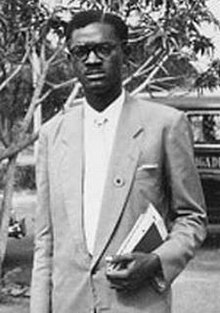
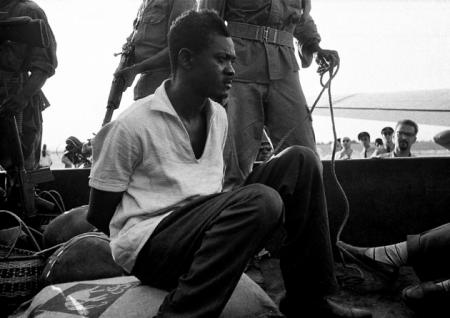
Letter from Thysville Prison to Mrs. Lumumba

My dear wife,

I am writing these words to you, not knowing whether they will ever reach you, or whether I shall be alive when you read them.

Throughout my struggle for the independence of our country I have never doubted the victory of our sacred cause, to which I and my comrades have dedicated all our lives.

But the only thing which we wanted for our country is the right to a worthy life, to dignity without pretence, to independence without restrictions.

This was never the desire of the Belgian colonialists and their Western allies, who received, direct or indirect, open or concealed, support from some highly placed officials of the United Nations, the body upon which we placed all our hope when we appealed to it for help.

They seduced some of our compatriots, bought others and did everything to distort the truth and smear our independence.

What I can say is this—alive or dead, free or in jail—it is not a question of me personally.

The main thing is the Congo, our unhappy people, whose independence is being trampled upon.

Speech at the Ceremony of the Proclamation of the Congo's Independence

Patrice Lumumba

Men and women of the Congo,

Victorious independence fighters,

I salute you in the name of the Congolese Government.

I ask all of you, my friends, who tirelessly fought in our ranks, to mark this June 30, 1960, as an illustrious date that will be ever engraved in your hearts, a date whose meaning you will proudly explain to your children, so that they in turn might relate to their grandchildren and great-grandchildren the glorious history of our struggle for freedom.

Although this independence of the Congo is being proclaimed today by agreement with Belgium, an amicable country, with which we are on equal terms, no Congolese will ever forget that independence was won in struggle, a persevering and inspired struggle carried on from day to day, a struggle, in which we were undaunted by privation or suffering and stinted neither strength nor blood.

It was filled with tears, fire and blood. We are deeply proud of our struggle, because it was just and noble and indispensable in putting an end to the humiliating bondage forced upon us.

That was our lot for the eighty years of colonial rule and our wounds are too fresh and much too painful to be forgotten.

Friday, 19 April 2013

The Writer in a Neo‐colonial State


Ngũgĩ wa Thiong'o

The African writer who emerged after the Second World War has gone through three decisive decades which also mark three nodal stages in his growth. He has gone, as it were, through three ages within only the last thirty years or so: the age of the anti‐colonial struggle; the age of independence; and the age of neo‐colonialism.

First was the fifties, the decade of the high noon of the African people’s anti‐colonial struggles for full independence. The decade was heralded, internationally, by the triumph of the Chinese Revolution in 1949 and by the independence of India in 1947. It was the decade of the Korean revolution, the Vietnamese defeat of the French at Dien Bien Phu, The Cuban people’s ouster of Batista, the stirrings of heroic independence and liberation movements in Asia, the Caribbean and Latin America. In Africa the decade saw the Nasserite national assertion in Egypt culminating in the triumphant nationalisation of the Suez canal, armed struggles by the Kenya Land and Freedom Army, Mau Mau, against British colonialism and by FLN against French colonialism in Algeria, as well as intensified resistance against the South African Apartheid regime, a resistance it responded to with the Sharpeville massacre. What marks the decade in the popular imagination, however, was the independence of Ghana in 1957 and of Nigeria in 1960 with the promise of more to follow.