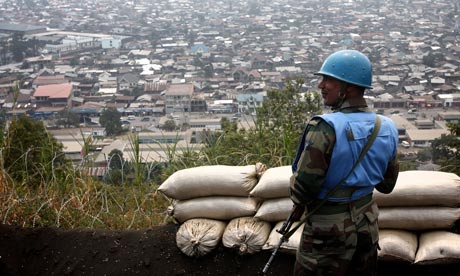
First-ever offensive force aiming to quash rebels in the volatile Central African country has made military gains
 While the world's attention has been fixed on Syria over the past few
weeks, the landscape of diplomacy quietly but radically evolved amid
the dense green hills of the Democratic Republic of the Congo (DRC).
While the world's attention has been fixed on Syria over the past few
weeks, the landscape of diplomacy quietly but radically evolved amid
the dense green hills of the Democratic Republic of the Congo (DRC).A flock of attack helicopters descended there on Aug. 28, in a town north of Goma, in the eastern region of the beleaguered Central African nation. The aircraft were filled with armed United Nations peacekeepers, along with Congolese military forces. The first-ever U.N. peacekeeping force with an offensive combat mandate – tasked with "neutralizing" and disarming rebel forces in one of the world's most intractable conflicts – was in action.
Within two days, the peacekeepers and army had forced rebel militias threatening Goma to withdraw from the front lines. On Thursday, a rebel group known as M23 agreed to resume peace talks with the Congolese government.
Despite the military and diplomatic gains, what impact the force will have on the ground in the eastern DRC remains to be seen – the country has suffered both internal and regional strife for decades. But the impact on peacekeeping is likely to be profound.
The Aug. 28 offensive has been brewing since March, when the U.N Security Council authorized what it calls an "intervention brigade" in the DRC. The 3,000-person unit is part of the more than 19,000 troops in DRC attempting to fulfill the U.N.'s "stabilization mission," but it has a significantly different purpose.
According to Al Jazeera correspondent Malcolm Webb, the intervention brigade is better equipped than either the local rebel groups or the Congolese military, with tanks, armored personnel carriers, artillery and night vision goggles. The brigade is comprised of three infantry battalions, one artillery unit and one special forces and reconnaissance company, and is authorized to shoot first – unlike any peacekeeping mission before it.